
An Intro to the Grantees: AI Agents, Protocol Freezes, and Protocolized Institutions

A look at DRC’s first grantees exploring AI agent identity, blockchain security governance, and the rise of protocolized institutions.
Platform Power and the Dangers of Centralized Government Platforms
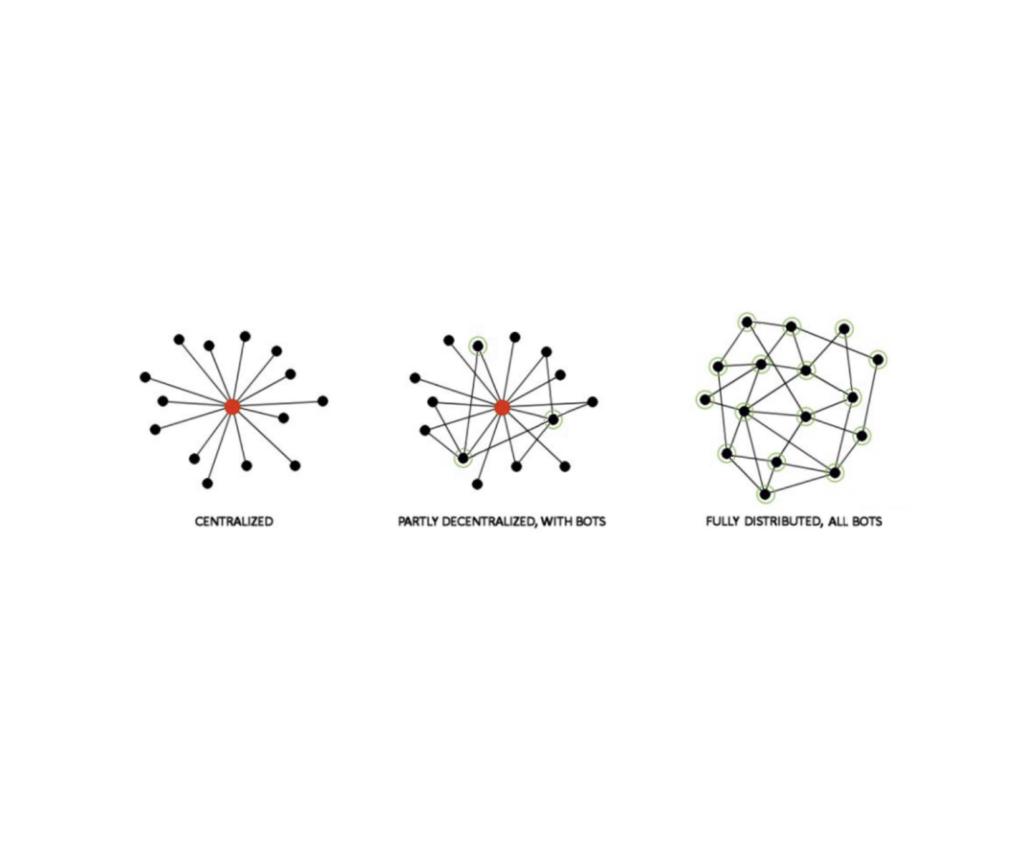
John Beezer argues that “platform power” – the ability of digital platforms to leverage network effects, data collection, and algorithms to shape markets and discourse – represents a potent and potentially dangerous form of control. As governments digitize services (e.g., Estonia’s e-Estonia and IndiaStack), they risk adopting similar centralized platform architectures that could enable unprecedented surveillance and manipulation, threatening democratic norms. Because platform power depends on centralization, Beezer proposes an alternative: decentralized government platforms enabled by agentic AI and blockchain-based identity. By allowing locally controlled AI agents to interface with public systems, governments can preserve digital efficiency while protecting democratic freedoms.
Introduction to the DRC Grants Program
Over the last few years, the DRC has gained a reputation for creating full stack responses to the decentralization issues of the day. We’re still working on that. That central concept, to create a throughline from concept to advocacy, is an approach that we would like to foster across the community. And so we started the DRC Grant, currently in its inaugural year. This blog post is to give some background on us and what we do, why we think this grants program is the natural next step, and some examples of projects that align with what we’re looking for. Hopefully, this will be helpful to applicants and other organizations considering the same issues.
Confidential Computing as an Antitrust Remedy for Google’s Search Monopoly

Following on from our recent Comment in the Stanford Journal of Blockchain Law and Policy, this blog post – reproduced from the original by kind permission from Flashbots – provides an update to the findings as the lawsuits against Google have progressed.
Some Reflections on a Defining Year for DRC
When we started this organization in 2021, we were guided by a conviction that emerging technologies, especially blockchain, could help bring more equitable governance and ownership to the digital economy, enabling broader economic participation through more disintermediated systems.
The Decentralization Conversation: Social Media

Through examples from social media, telecom history, and emerging protocols, this conversation examines the tension between convenience and control, why centralization persists, and how decentralized systems might restore resilience, diversity, and real choice in how we interact online.
When One Company Owns Your Memory

Search was once open, messy, and plural. Then PageRank turned discovery into a single chokepoint, and Google became the gatekeeper of the web. Social media promised connection, then collaborative filtering concentrated our attention on a handful of feeds optimized for outrage and compulsion. Both became monopolies, both rewrote society. Now, AI brings a new frontier: memory, the structured record of our lives.
Status Games: Social Media and the Gamification of Value

Status, unlike power or wealth, is a measure of social standing that must be conferred by others, and the Internet has enabled a plethora of quantifiable status measurements. These measurements of value are, however, inherently flawed. Conferring status creates inequality by definition and quantifying it exacerbates that inequality.
PRESS RELEASE: Decentralization Research Center Enhances its Advocacy with Key Team Addition

Kyle Bligen joins the DRC as Head of Policy and Public Affairs, where he will lead the organization’s advocacy before Congress and federal regulators on blockchain policy, digital asset market structure, and the future of artificial intelligence.
From Laws to Ledgers: Why Protocols—Not Policy—Must Tame Self-Sovereign AI.

In light of the current development of the “agentic web,” we are perhaps witnessing the birth of a new digital species: decentralized AI agents (DeAgents) that train, reason, transact, and even reproduce without human-in-the-loop.